When was the last time you went on an archaeological dig through your sock drawer? Do you have any relics, stuffed at the back, that are faded and missing their sole-mates? Well, you can take comfort in the fact that a pair of socks on display at the Victoria and Albert Museum is thought to be around 1600–1800 years old.
If you’ve ever wondered what people in Roman Egypt wore on their toes, or whether
Queen Elizabeth the First would have given her royal approval to fast fashion, you’re
in good company. Join us as we swap our sewing machine for a time machine and
unravel the history of socks, one small stitch at a time.

Walk like an Egyptian
Slip into a decent pair of sandals, because the first stop on our hysterical historical tour is the fashionable footwear of Late Antiquity. You may think pairing socks with sandals is a recent trend, but for people living in Roman Egypt, the combination was a wardrobe essential.
One of the oldest surviving socks in the world was found during the excavation of Antinooupolis. This single child’s sock, now on display at the British Museum, is estimated to have been made between the 3rd and 4th centuries CE. We’ll never know what happened to its other half, but it’s fascinating to see the colours they chose, as well as the stitching that separates the toes so that a child could wear it with sandals.

The Middle (Toe) Ages
As we travel forward through time to the Middle Ages, people really start pulling their socks up. Although the period may have started with foot wraps and woollen socks like these Viking socks found by a settlement in England, towards the end of the era, sock-knitting techniques had really taken a step forward.
As medieval garments became fashionably shorter, socks began to get longer, and those in the richer classes could be spotted wearing a garment known as hose. Elastic hadn’t been invented yet, so garters were fashioned from leather to hold the hose up. While they were mostly made of wool, those in the upper classes could enjoy wearing hose made from velvet and even silk. Now that’s what we call aris-toe-cratic style.

What a stitch-up
If there’s one thing you learn as an entrepreneur, it’s that your brilliance isn’t always appreciated by the people around you straight away. As we hop into our time machine once more, we’re transported to 1589, when William Lee invents the world’s first stocking frame knitting machine – an idea that will make knitting socks faster and more affordable for everyone.
Unfortunately, it seems that Britain isn’t quite ready for Lee’s revolutionary invention. According to a popular story, Queen Elizabeth the First rejected the idea because she feared it would put her people out of work. She’s said to have told him, "Consider thou what the invention would do to my poor subjects. It would assuredly bring them to ruin by depriving them of employment, thus making them beggars."
Not to be deterred, William Lee took his invention to France, where he had more success with King Henry IV. However, as the King’s assassination brought an end to his patronage, it seems Lee was just a little too ahead of the curve to enjoy huge success in his lifetime.

The end is nylon
Lee’s machinery was just the beginning of a revolution in the textiles industry that would change the way Britain thought about footwear forever. In fact, Queen Elizabeth the First would have been shocked by just how quickly things progressed.
The industrial revolution of the 1800s transformed the textiles industry into one that could truly serve the masses, making owning multiple pairs of comfortable socks a possibility for everyone – and just in time, too. During the First World War, trench foot was a real threat to the health of soldiers, and so having a steady supply of dry knee-length socks became critical to the war effort. As these letters show, socks were on the minds of many soldiers far from home. Knitters around the world apparently contributed millions of pairs of socks to support the soldiers on the front lines.
By the time 1939 and the commercial introduction of nylon rolled around, socks were made on assembly lines. The new stretchy technology meant designs could now accommodate a wider range of foot sizes.

Great change is afoot
As Britain began to emerge from the austerity of war, designers started to put the fun in functional clothing. Suddenly, what you wore communicated more about you than simply the type of materials you could afford.
Advances in production and dyeing techniques meant the younger ‘mod’ generation could choose geometric and psychedelic patterns that would peek out from under their hemmed trousers, or knee-length socks to partner with their miniskirts. And of course, who could forget the iconic neon leg warmers of the 1980s?
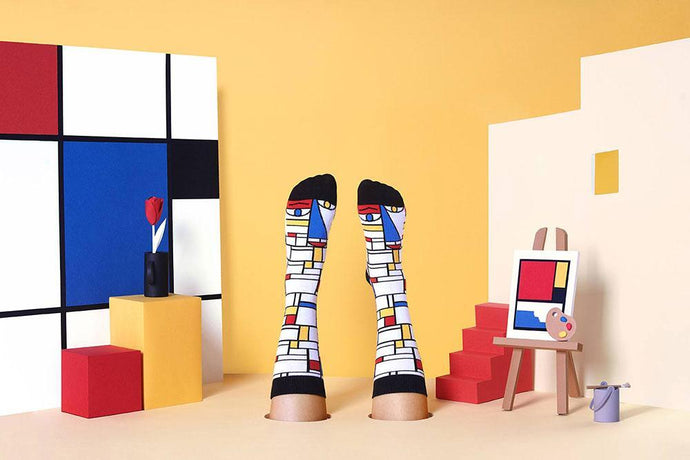
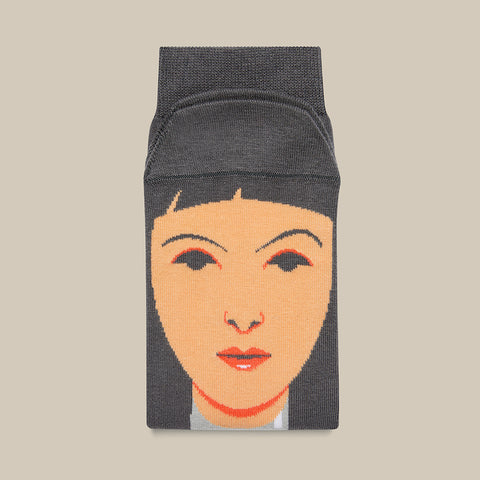
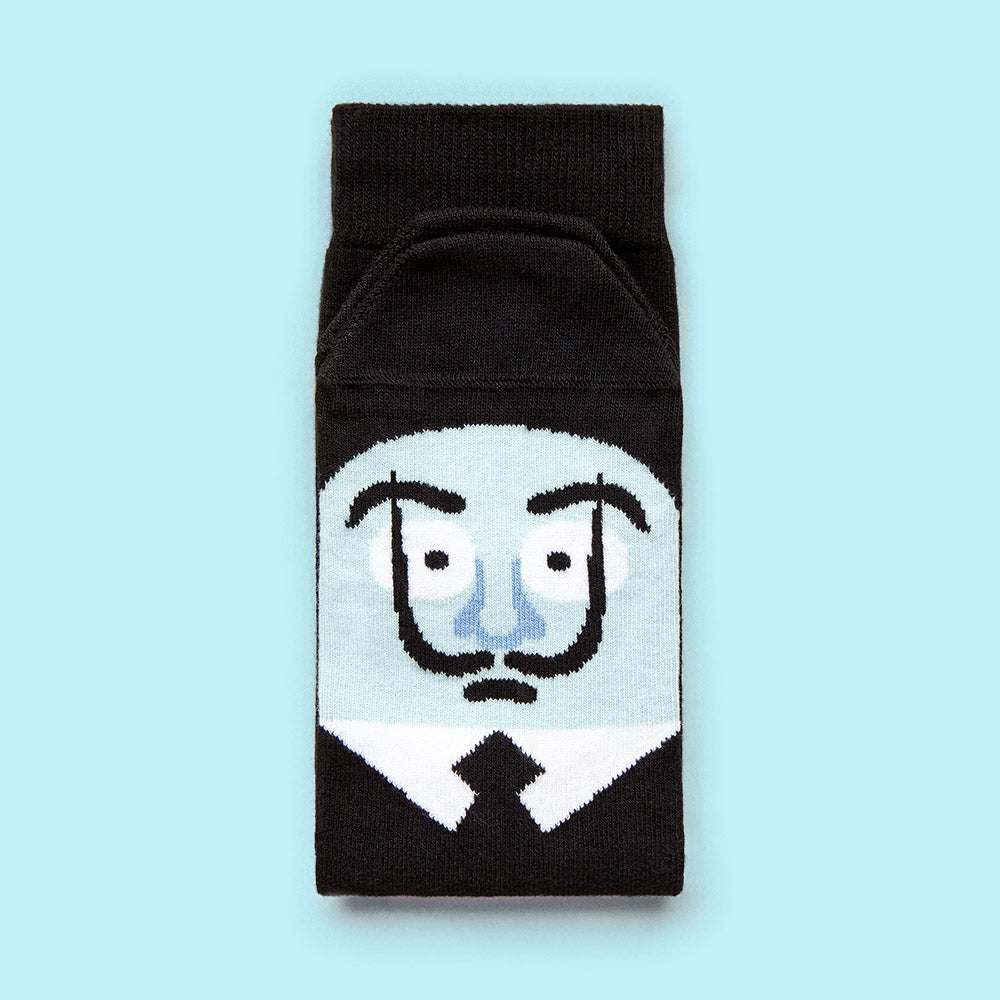
The desire for novelty fashion only continued into the 21 st century, and in 2012, we launched ChattyFeet to transform socks into an opportunity for play. With a whole host of friendly pun-based characters, we encourage people to see socks as something that can be as individual as a footprint. The Ancient Egyptians could never have imagined that there would one day be a pair of socks named Cleopedicure inspired by one of their leaders.

1. Modern historians have questioned the reliability of this story, as the first retellings don’t appear until the 19th century. Still, we love spinning a good yarn as much as anyone.
The future of footwear
As our time machine touches back down in today’s world and we reach the end of our stroll through the history of socks, we can only imagine what the future of footwear will hold.
Tomorrow's socks may be knitted to the exact shape of your feet or woven from compostable fibres that leave behind no waste. They might even be fitted with tiny trackers that help you to keep the pairs together after washing them.
Our only hope is that the next generation of designers remembers what made socks such an indispensable item of clothing throughout history – comfort.
Keep walking through history
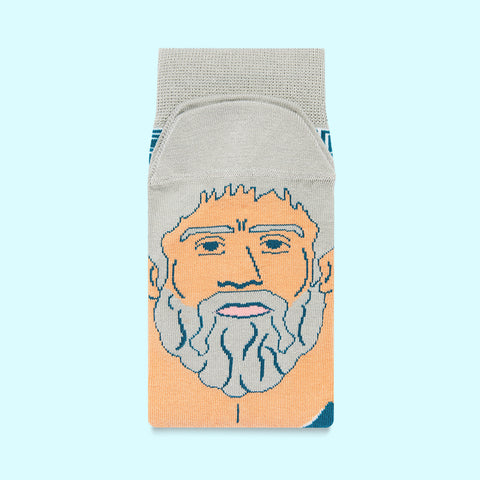
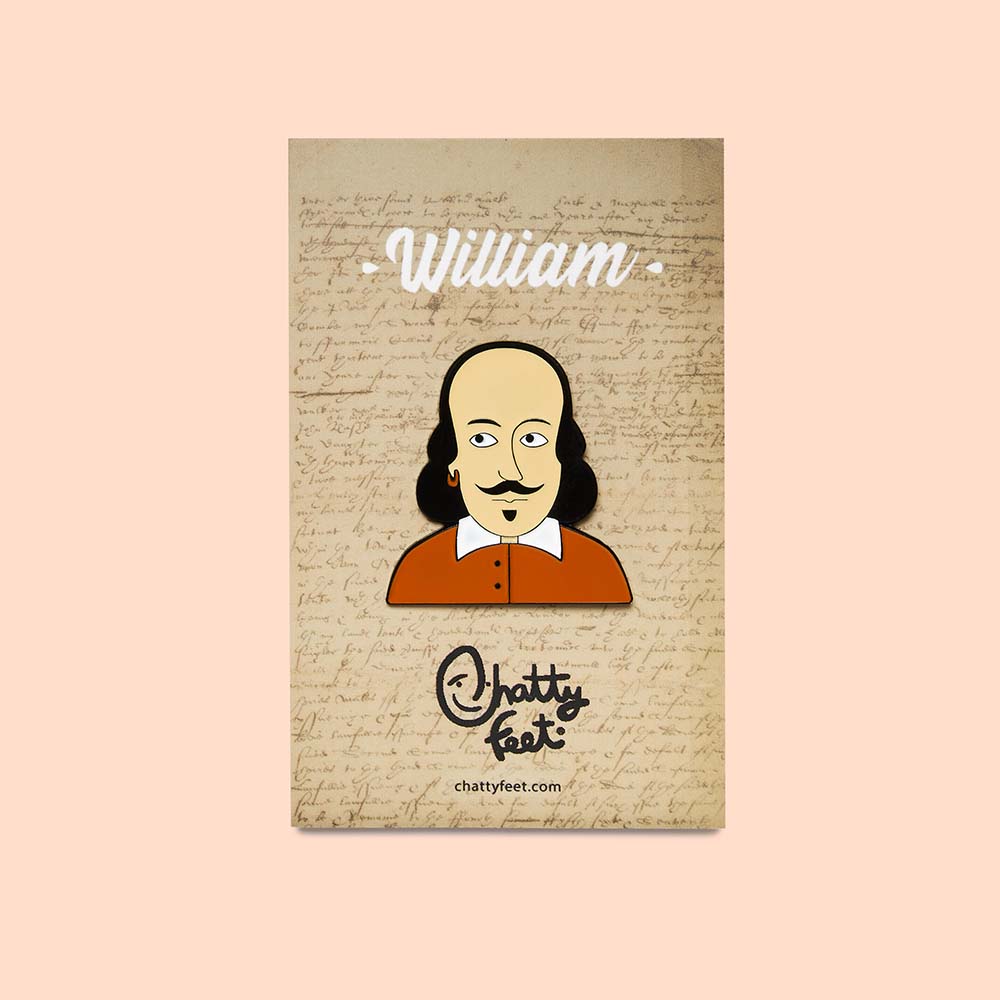
If you’ve loved travelling through time with us, why not start every day with a historical tour of your house? You could tread the (floor)boards with William Shakes-Feet or imagine you’re giving a walking lecture about your plans for the day with Aristoetle. Whichever moment in time you want to step into, ChattyFeet has a sock to transport you there in style.